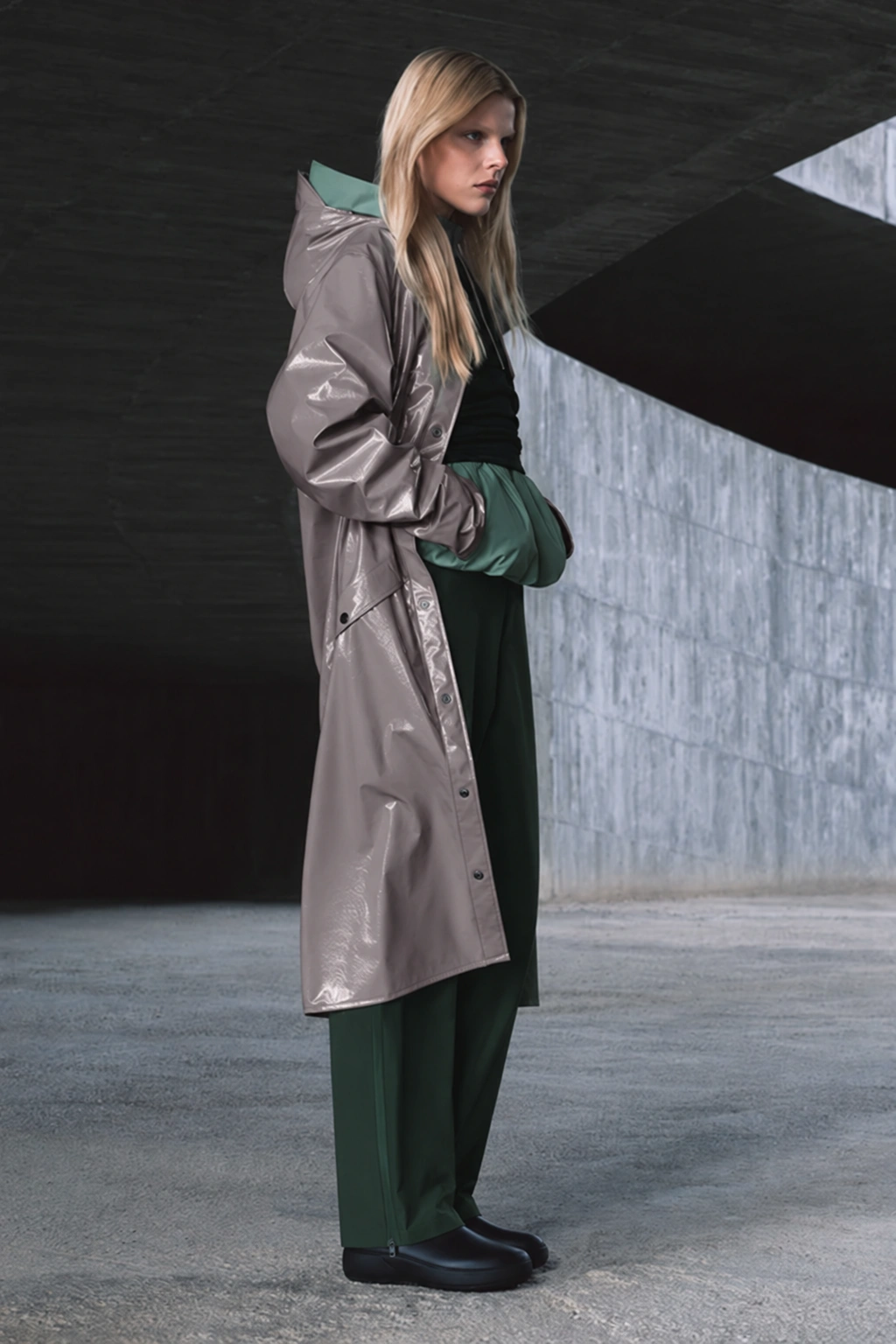
Rainwear & Footwear · Size Guide
Find your fit.
Keep your plans.
Rainwear works best when it leaves room for real life — walking, commuting, moving and layering underneath. Use this guide to compare garment measurements, understand each silhouette and find the shoe size that feels right before you order.
Before choosing a size
Start with something you already know fits.
For rainwear, comparing a jacket, coat or pair of trousers you already enjoy wearing is often more useful than choosing from height or weight alone. Lay the garment flat, take the same measurements shown below and compare them with the chart.
Think about layers.
Measure over a garment with a fit you like. If you expect to wear knitwear or another layer underneath your raincoat, leave enough room through the chest and shoulders.
Movement matters.
Check the waist and inseam, but also think about what you will wear underneath. Drawstring and elasticated waists give some flexibility, while the intended leg shape should still be preserved.
Measure both feet.
Measure your feet while wearing the socks you expect to use. If one foot is slightly longer, use the longer foot when comparing sizes.
Measurements shown in the garment tables are measurements of the finished garment laid flat — they are not body measurements. Different styles can have different proportions even when they carry the same size label. Always check the sizes currently offered on the individual product page.
Men's
Rainwear sizing
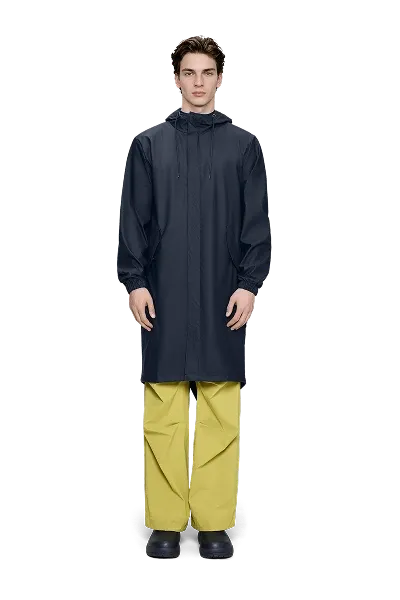
Men's rainwear includes straight and regular outerwear silhouettes together with loose-fitting rain pants. Start with the size range for your product, then use its silhouette to decide how much room you want underneath.
Choose by silhouette
Straight Fit
Compare chest and shoulder measurements first. The shape falls relatively straight through the body.
Regular Fit
Designed with everyday room rather than a close fit. Keep your normal layering habits in mind.
Loose Rain Pants
Intended to leave room through the leg. Use the waist adjustment for comfort rather than trying to create a slim silhouette.
Men's technical straight raincoat
Garment reference · measured flat. Best used for straight / regular technical raincoat silhouettes.
| Garment measurement | XS | S | M | L | XL | XXL |
|---|---|---|---|---|---|---|
| Length | 84 | 86 | 88 | 90 | 92 | 94 |
| Shoulder width | 47 | 49 | 51 | 53 | 55 | 57 |
| Chest width | 58 | 60 | 62 | 64 | 66 | 68 |
| Bottom width | 58 | 60 | 62 | 64 | 66 | 68 |
| Sleeve length | 66 | 66 | 67 | 68 | 69 | 70 |
How to choose your raincoat size
Lay it flat without stretching the fabric.
These have the greatest effect on comfort and movement.
Use these to decide the coverage and proportion you prefer.
A raincoat worn over knitwear needs more space than one worn over a T-shirt.
Between two sizes?
If both sizes work through the chest and shoulders, consider how you plan to wear the coat.
More layering:
the roomier option will usually be more comfortable.
Cleaner, closer silhouette:
the smaller option can work when it still leaves comfortable
movement through the chest, shoulders and arms.
Women's
Rainwear sizing
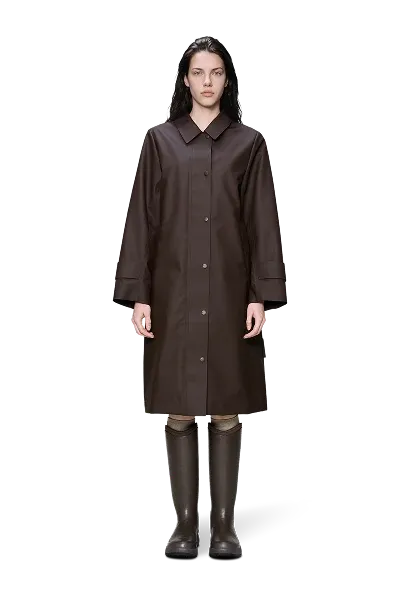
Women's rainwear includes A-line, straight, cropped, flared and wide-leg silhouettes. The same size can feel noticeably different between these shapes, so identify the product's fit before comparing measurements.
Choose by silhouette
A-Line
More room is intentionally built into the lower body. Prioritise the shoulder and chest instead of trying to match the hem to a straight jacket.
Straight Fit
The body falls more directly from the chest. Compare shoulder, chest and overall length with a coat you already wear comfortably.
Cropped / Wide-Leg
Cropped jackets are intentionally shorter, while wide-leg trousers are intentionally roomy. Do not size down simply to remove the intended silhouette.
Women's long A-line raincoat
Garment reference · measured flat. The generous bottom width is part of the intended A-line silhouette.
| Garment measurement | XS | S | M | L | XL | XXL |
|---|---|---|---|---|---|---|
| Length | 118 | 121 | 124 | 127 | 130 | 133 |
| Shoulder width | 38 | 40 | 42 | 44 | 46 | 48 |
| Chest width | 53 | 55 | 57 | 59 | 61 | 63 |
| Bottom width | 98 | 100 | 102 | 104 | 106 | 108 |
| Sleeve length | 60 | 61 | 62 | 63 | 64 | 65 |
Women's wide-leg rain pants
Garment reference · measured flat. The waistband is elasticated, so both relaxed and stretched widths are shown.
| Garment measurement | XS | S | M | L | XL |
|---|---|---|---|---|---|
| Full leg length | 111 | 113 | 115 | 116 | 118 |
| Waist · relaxed flat | 33 | 35 | 37 | 39 | 41 |
| Waist · stretched flat | 44.5 | 46.5 | 48.5 | 50.5 | 52.5 |
| Inseam | 83 | 84 | 85 | 86 | 87 |
| Leg opening | 36.5 | 37.5 | 38 | 38.5 | 39 |
How to choose women's rainwear
A-line and straight jackets in the same letter size are not intended to fit the same way.
Make sure both remain comfortable with the layers you plan to wear.
Then make sure the hip and thigh area leaves enough freedom to walk and sit comfortably.
Do not size out the design.
An A-line coat is meant to open through the lower body. Wide-leg trousers are meant to have volume through the leg. Cropped jackets are meant to finish higher on the body.
Choose your size from the areas that control fit — especially shoulders, chest, waist and inseam — rather than trying to make every style fit like a slim garment.
Men's & Women's
Shoe sizing
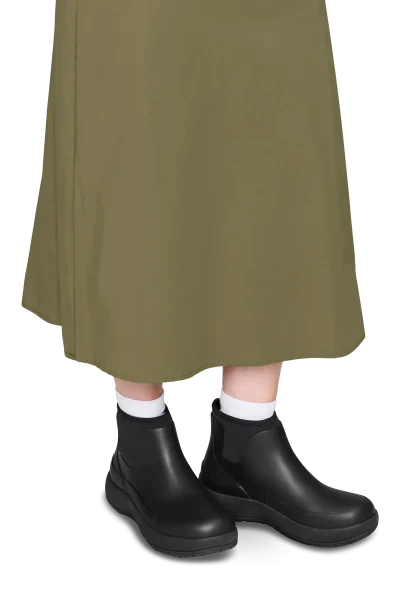
Footwear across the current collection uses EU sizes 36–47. The waterproof duck-boot styles use a shared, unisex sizing system.
Measure while wearing the type of socks you expect to use with the boots.
Use the longer foot as your reference if there is a small difference between the two.
These unisex boot styles can typically be taken in the closest smaller size when you fall between sizes.
Footwear conversion
EU size · insole length · US men's · US women's · UK.
| EU | Insole | US Men | US Women | UK |
|---|---|---|---|---|
| 36 | 24.2 | 4 | 5 | 3.5 |
| 37 | 24.5 | 5 | 6 | 4 |
| 38 | 25.5 | 6 | 7 | 5 |
| 39 | 25.8 | 7 | 8 | 6 |
| 40 | 26.9 | 7.5 | 9 | 6.5 |
| 41 | 27.2 | 8 | 10 | 7 |
| 42 | 28.2 | 9 | 11 | 8 |
| 43 | 28.5 | 10 | — | 9 |
| 44 | 29.5 | 10.5 | — | 9.5 |
| 45 | 29.8 | 11 | — | 10 |
| 46 | 30.8 | 12 | — | 11 |
| 47 | 31.1 | 13 | — | 12 |
Measure once. Choose better.
How to measure
Use a flexible measuring tape and keep it level. For body measurements, wear light clothing and do not pull the tape tightly. For garment measurements, lay the item flat.
Chest / Bust
For your body, measure around the fullest part. For a garment, measure flat from underarm to underarm.
Shoulders
On a garment laid flat, measure straight from one shoulder seam to the other.
Waist
Measure around your natural waist for the body, or straight across the waistband when measuring trousers flat.
Inseam
Measure from the crotch down the inside leg. A pair of trousers with a length you like is a useful reference.
Foot Length
Stand on paper, mark the heel and longest toe, then measure between the marks. Repeat for both feet.
Fit questions
A few things worth knowing.
Do all XS, S or M products fit the same?
What should I do if I am between two raincoat sizes?
Should I choose my rainwear size from height and weight?
Why does one colour sometimes have fewer sizes?
Are men's and women's boot sizes different?
What if I still cannot decide?
Still deciding?
Tell us what you're wearing. We'll help you check the fit.
Send us the product name and your measurements before ordering if you would like a second opinion on sizing.